Transcript
Hello and welcome back. I am Josh from Nomio and I am the only person in the world who is hedonistic enough to have dedicated the last seven years of their life to doing nothing but building and maintaining contract repositories.
Let’s get to it. In the last video, we talked about how no matter what kind of system you use, if it is a person who is managing that system, you are going to concentrate rather than remove key person risk. And we ended by saying, okay, well, is key person risk such a big deal? Maybe I can live with that.
And today, I want to walk you through one of two big types of key person risk, which is chronic key person risk.
The kind of key person risk that you are feeling today, that you are paying a tax for every single day in your business, even if you don’t realise it.
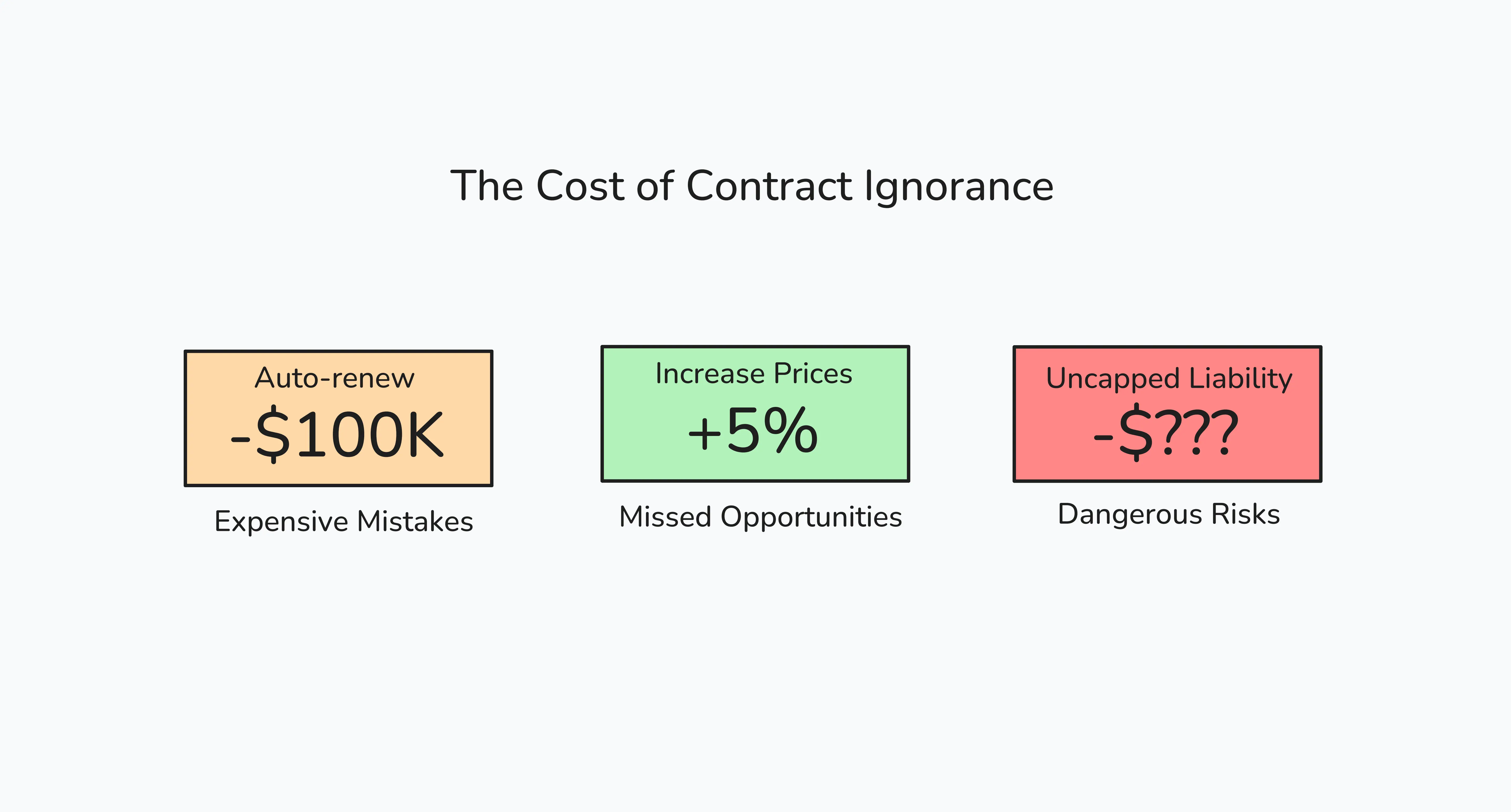
And we’re going to start by looking at the cost of what I like to call contract ignorance. This is ultimately the reason we build and maintain contract repositories to begin with.
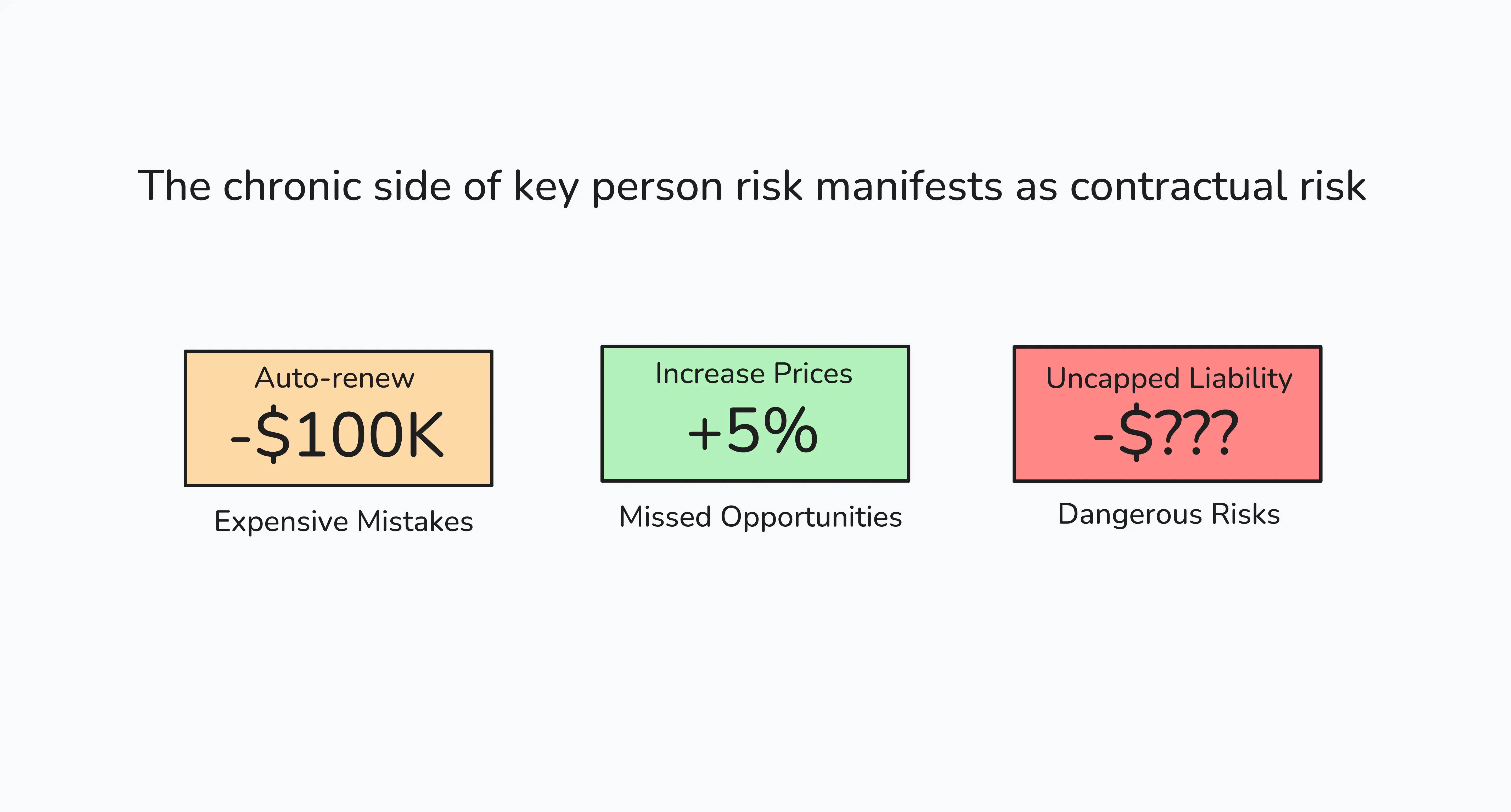
When we don’t know what’s in our contracts, we make a lot of expensive mistakes like letting contracts auto renew when we want to cancel them.
We miss opportunities such as when we want to increase prices for our customer contracts and the contracts entitle us to those increases but we don’t have visibility on exactly how and how much we can increase those prices by.
And then dangerous risks which may not happen as often but when they do happen they bite you really really hard.
The way that we solve these problems is by building a contract database that has high quality accessible data to the whole business.
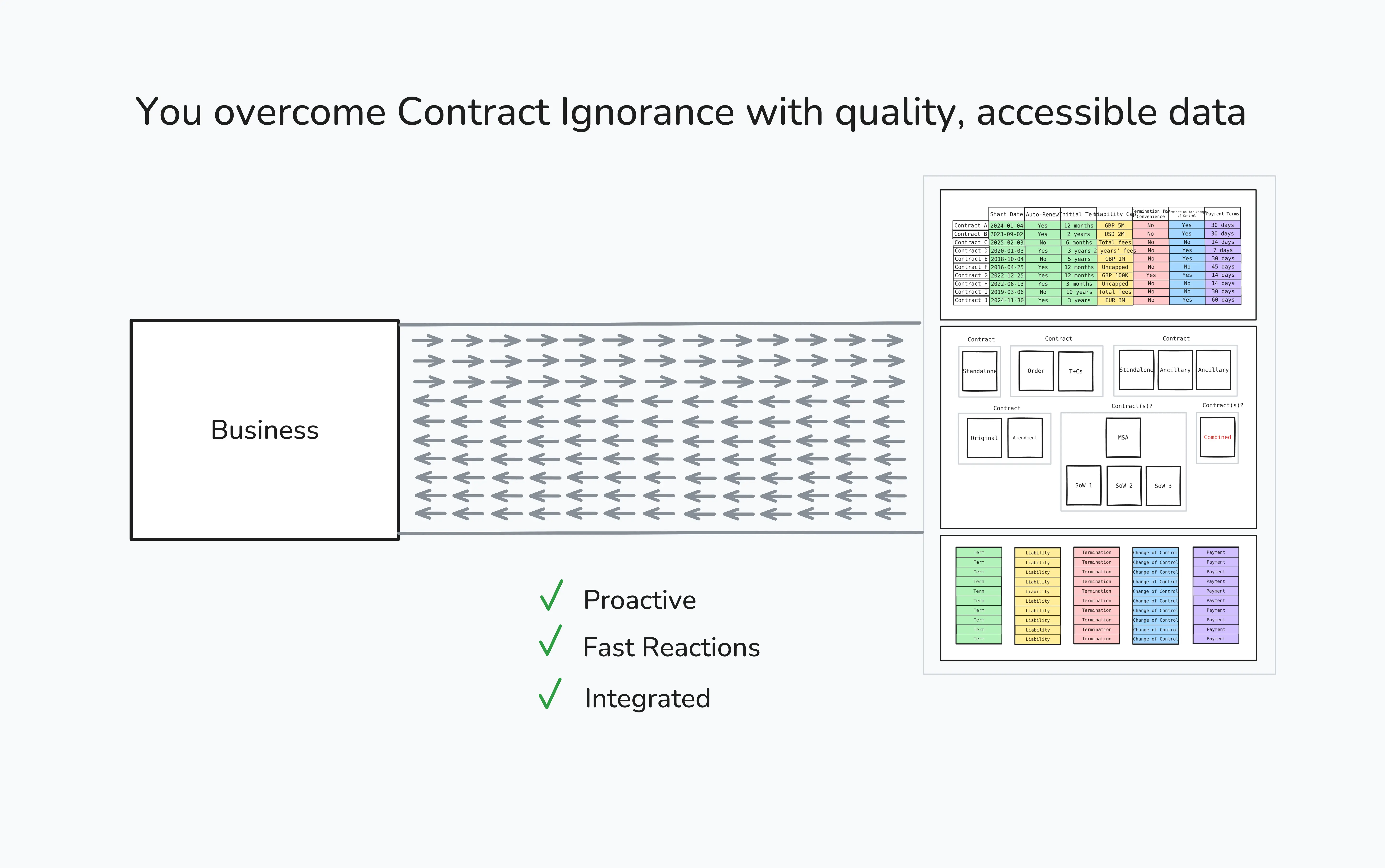
And what happens here is it means that you as a business can be proactive. You can act on the data in your contracts before it becomes a problem.
You can get alerts for when contracts are renewing, for example. But you can’t be proactive about absolutely everything. Luckily, a really good database will allow you to react very quickly when you do suddenly need a piece of information.
And the great thing here is that it’s integrated with all of the systems in your business that depend on this information.
We can just very easily export information from the database into any other system. And so there is no obstruction to the dataflow between the business and the business’s contracts.
The database has more than enough capacity to manage everything the business could possibly throw at it. Now contrast this with a system that is dependent on someone to maintain or manage.
This bottlenecks everything. We’ve got all of these things that the business wants, but if it has to go through a person, then we massively narrow the flow of information and you might see here that we’ve gone from grey to brown arrows because when a person’s in the way, that information gets distorted both on the way in and on the way out.
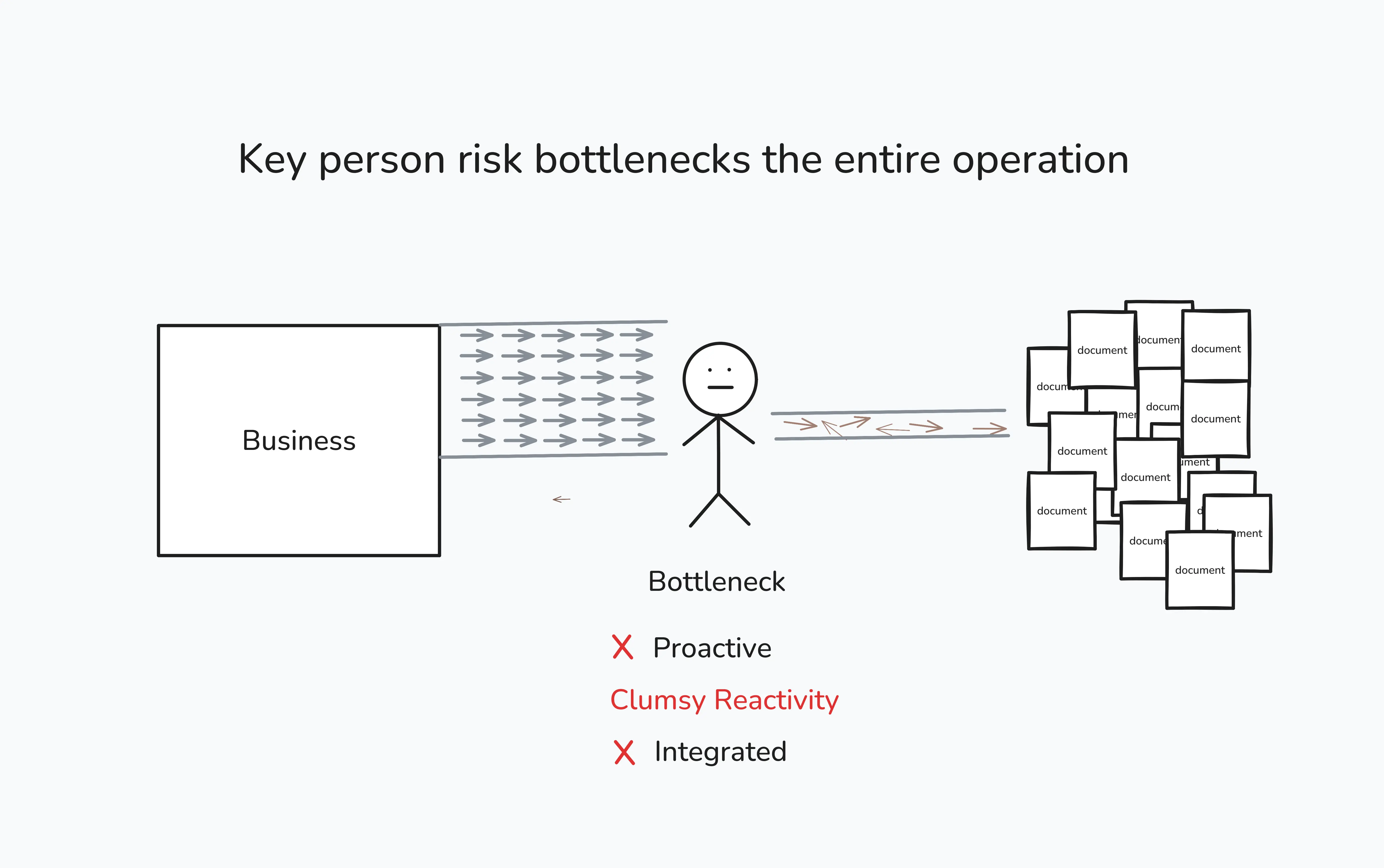
But we end up with such a tiny amount of information flowing back to the business that we don’t have any time for proactivity.
You cannot plug a person into systems like your CRM or accounting system. It’s not integrated at all, and we have such a tight budget for the kinds of information we’re able to service that the business wants, that when we do react to urgent events, it’s at best clumsy.
And a more pernicious effect here, that is less obvious, is that over time, the business learns that it doesn’t get what it wants.
When it has contract questions. So the standards that the business expects drop and the business asks less and less and less.
So even if you think you can just about cope with everything, it’s probably only because there’s nowhere near as much demand from the business as they otherwise would be, if you were in a good situation.
And the thing is, like we established last time, even if you build a system to try and take the person out of it, you might take them out in some ways, but you introduce them in other ways.
You’re now dependent on this person to keep the spreadsheet up-to-date. And maybe they’re still controlling the flow of information because of permissions.
CLM, same story. You still have someone maintaining this thing, and so you’re still dependent on them for this information flow to work.
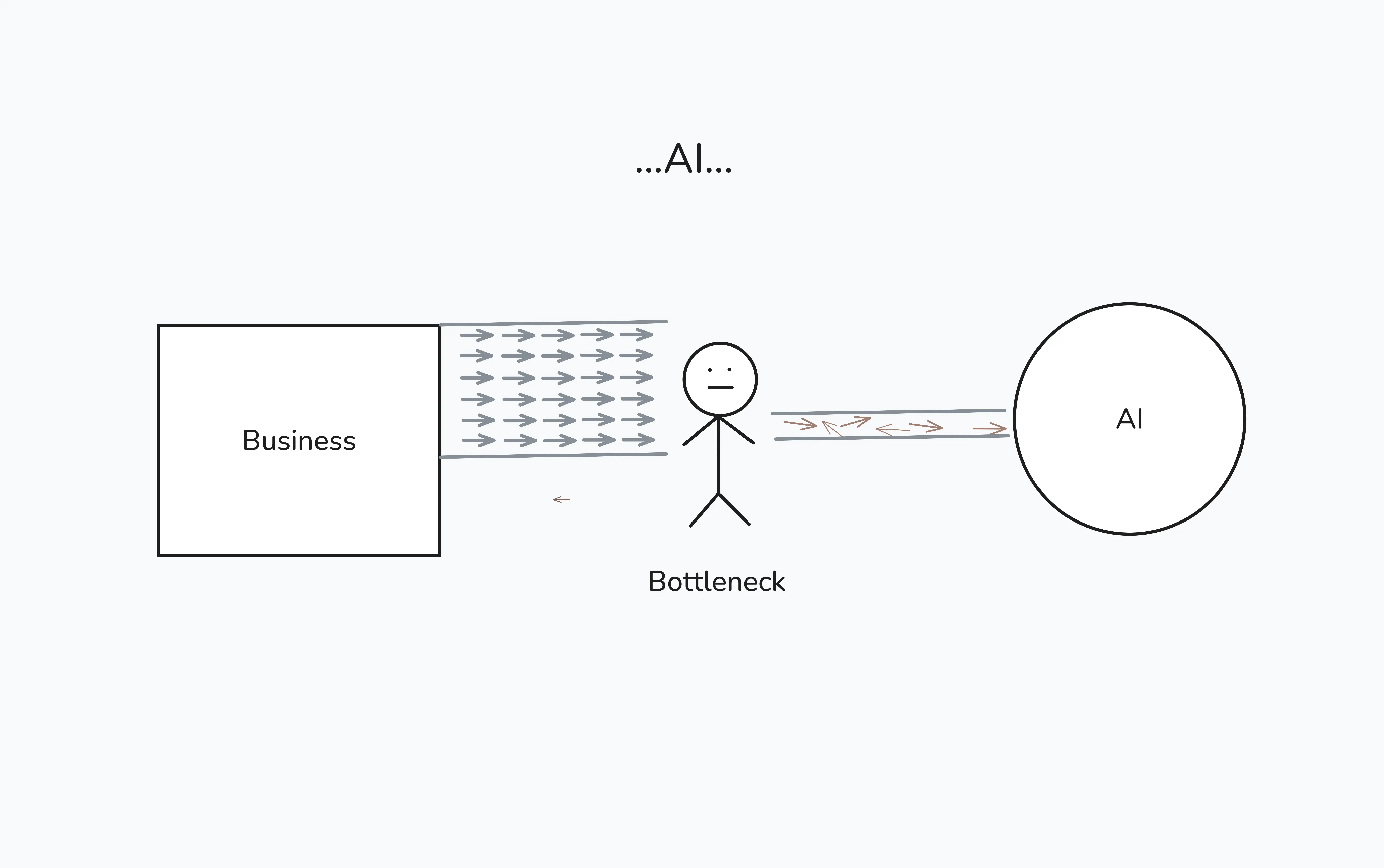
And it’s the same with AI. As we saw last time, AI is a real red herring because, on the surface, it makes things look really easy, but because it’s such an opaque system that you have no idea what’s going on inside it, there’s a huge amount of work, calibration, translation for whoever’s looking after it to do in order for the thing to work. And the same principle applies no matter what kind of system you have.
If your system is dependent on someone in your business maintaining it, either directly, like punching data in, or indirectly, like keeping a set of processes running, then you’re going to get information flow that looks like this.
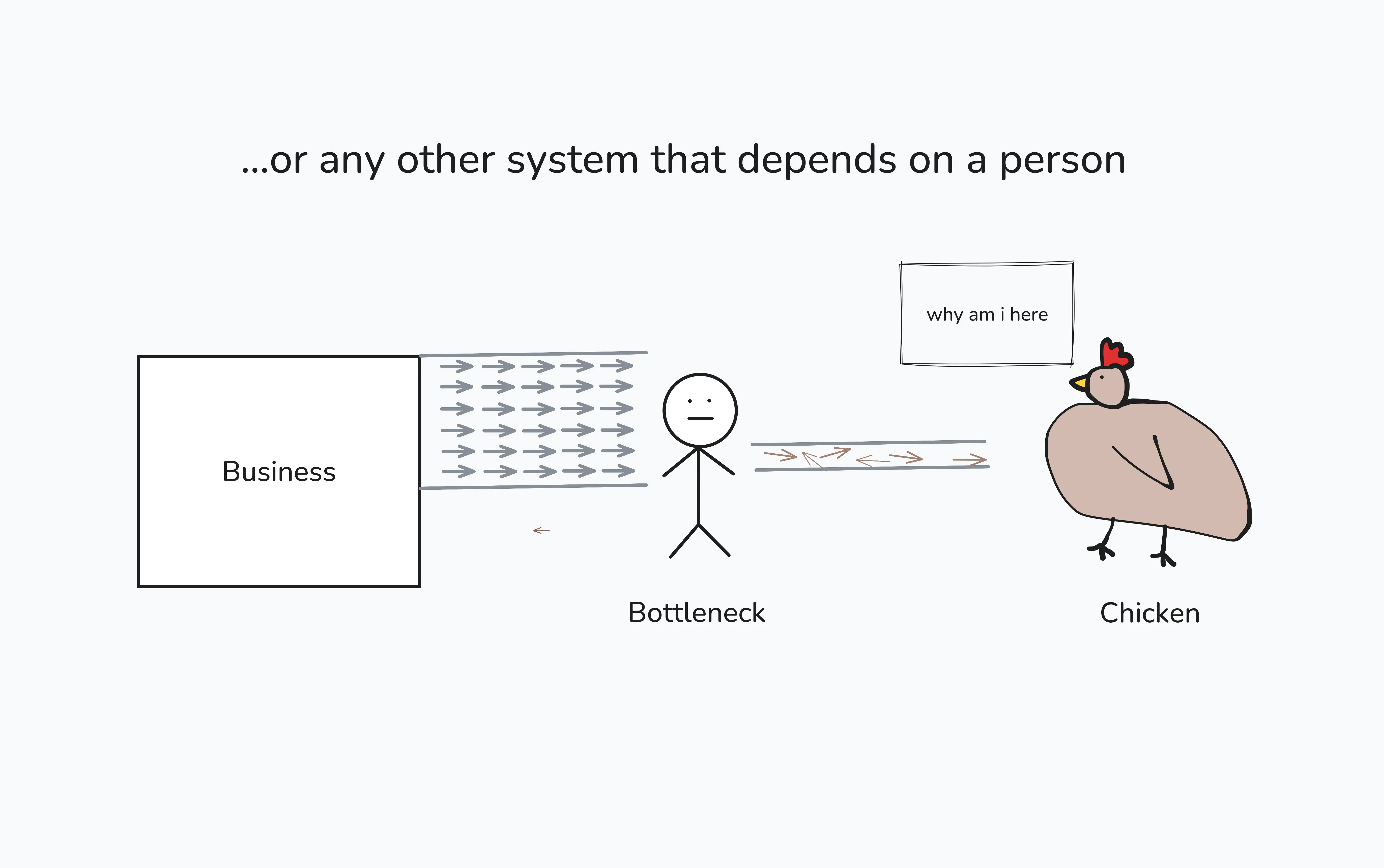
Because remember that they’ve got a whole load of other things that need doing. And because contract management is the sort of thing that is important, but almost never seems urgent, it gets pushed to the bottom of the list, and so it doesn’t really get done.
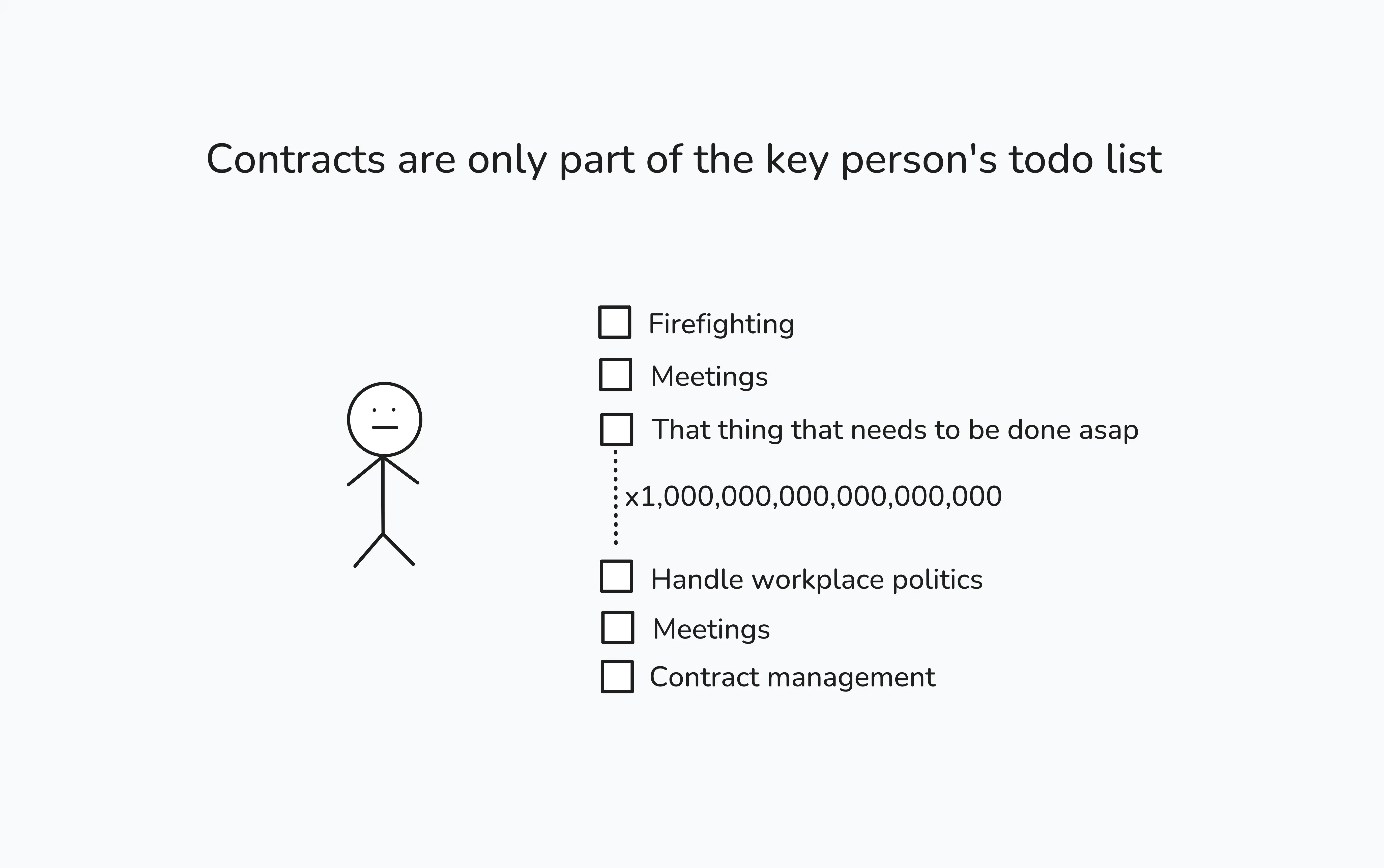
Remember that jobs tend to expand or shrink to fill the amount of capacity that is given to them.
And the outcome of all of this is that you’re paying a tax every day, in the form of contractual risk that’s costing you money through expensive mistakes, missed opportunities, and risks that you’re sitting on that have either already messed you up or are waiting to do so.
And these are the sorts of things that, when not paid attention to and proactively addressed, become part of what I would call acute key person risk.